
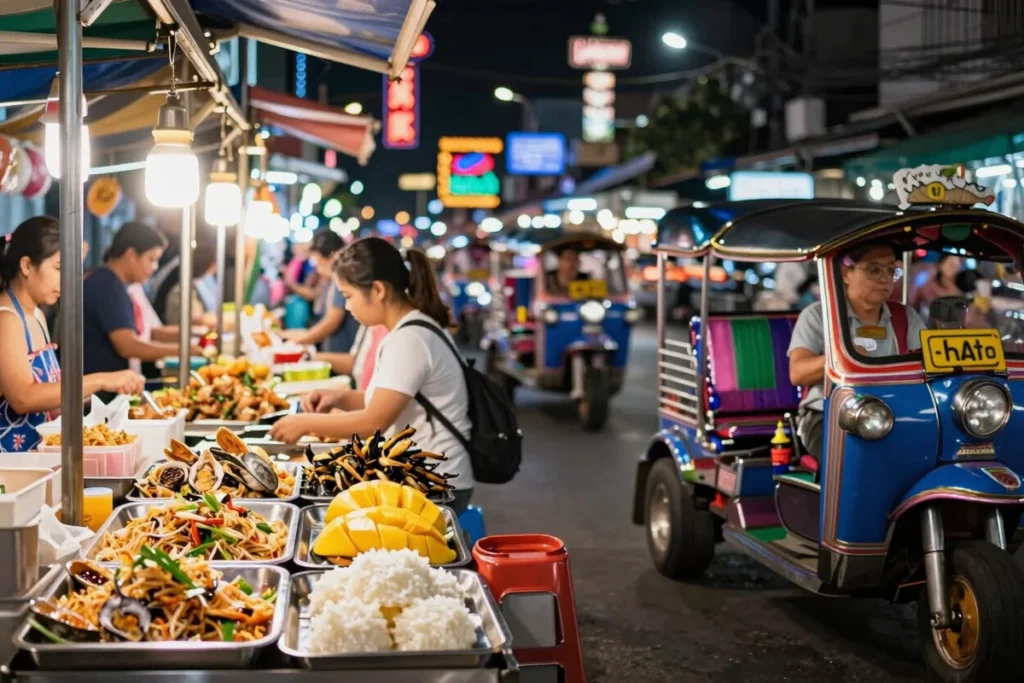
Street food is the best value meal in Southeast Asia, and every country has its own unwritten rules. These are the basics we wish someone had told us.
Singapore
Grab a table before you queue; locals reserve seats by leaving a tissue packet on them. Return your tray when you are done, because tray return is enforced at hawker centres.
Malaysia
Mamak stalls are a late-night institution, and many stay open around the clock. Order a teh tarik, the “pulled” milk tea, and pay at the counter when you leave.
The Philippines
Street food is often eaten standing, straight from the stall. At a kamayan meal, food is laid out on banana leaves and eaten with your hands.
Indonesia
Eat and pass food with your right hand. Many warungs show their dishes in a glass cabinet: point at what you want, and you pay for what is on your plate.
Thailand
Use the fork to push food onto the spoon; the spoon goes in your mouth, not the fork. Noodle stalls leave chilli, sugar, fish sauce and vinegar on the table so you can season your own bowl.
Vietnam
Low plastic stools are normal, not a sign of a bad stall. Tear the fresh herbs from the plate into your pho as you eat, and pay when you finish.
Everywhere
- Carry small notes; many stalls do not take cards.
- A long local queue is the best review there is.
- Ask before photographing the cooks.